Digit4Pork
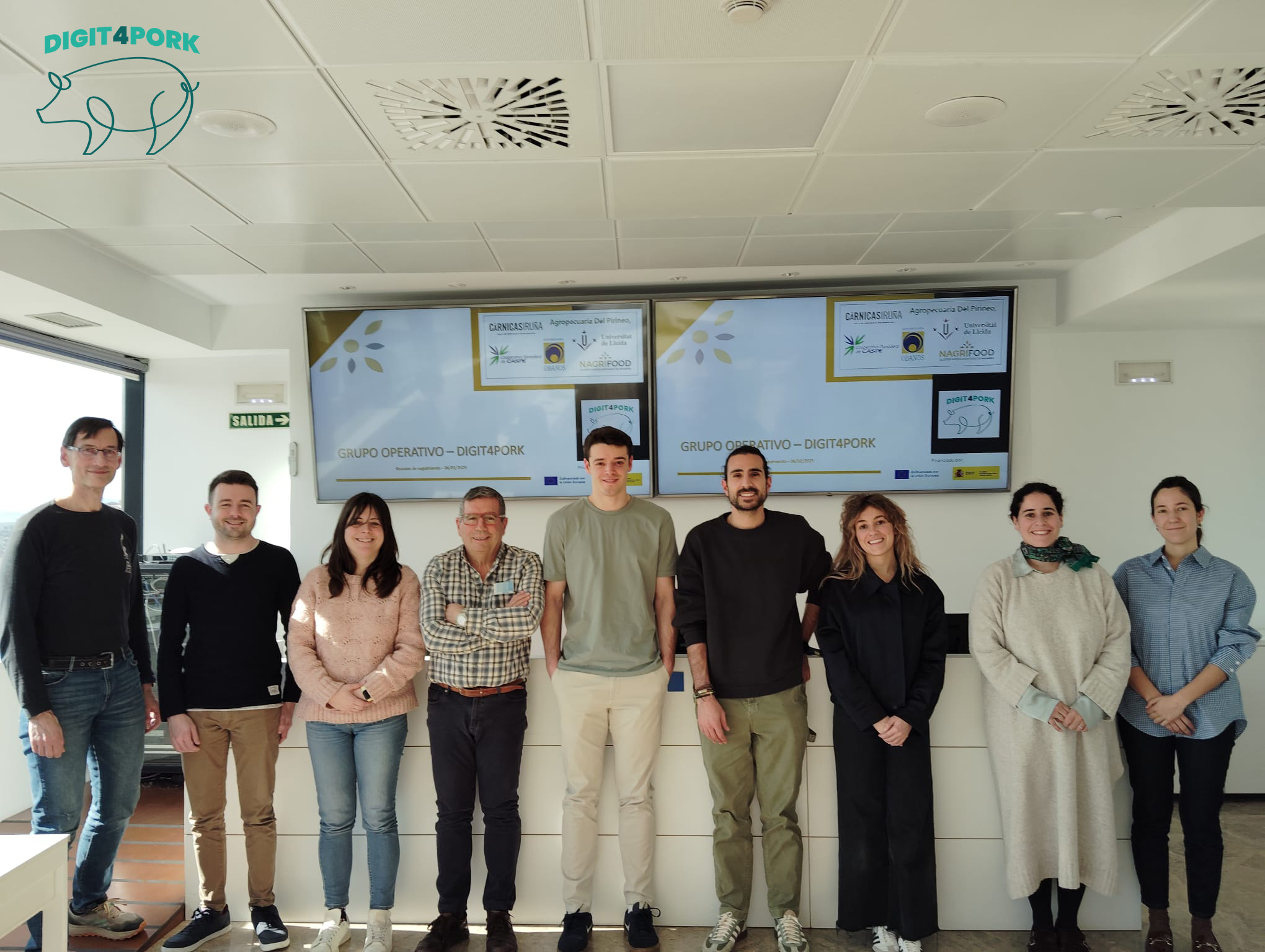 Research Team
Objective:
The main objective of the GODIGIT4PORK project is to optimize and coordinate the supply chain in the pork sector through the implementation of a digital twin, specifically focused on the production of fattening pigs that supply a slaughterhouse and its associated cutting room. This will allow livestock companies to understand much more accurately the composition of their final product and how it changes depending on the slaughter weight, allowing them to improve feed efficiency by designing more tailored diets. The implementation of a digital twin for the pork supply chain is an innovative approach to digitally transform and optimize the pork industry, providing both economic and social benefits by improving operational efficiency, product quality, and environmental sustainability. This digital twin is a virtual replica in near-real time, meaning it is updated with the same frequency as the data from the final stage of the pork supply chain, covering fattening and carcass cutting. This aims to improve production efficiency, traceability, and decision-making. A. Pirineo, A. Obanos, Ganadera de Caspe, and Cárnicas Iruña, and the University of La Plata (UdL), will design a study protocol for the characteristics of the different genetic lines that each company will contribute to the project. This protocol will be used to create a digital twin of the fattening and cutting stages in the slaughterhouse, aimed at optimizing the coordination of slaughtering with the shipment of fattened pigs based on differential performance by genetics and weight. The digital replica of the system will be developed by verifying the maximum growth potential of the different lines and will be validated in the field on experimental farms belonging to the different companies in the GO.
Key Features of the Proposal:
- Supply Chain Coordination: The digital twin covers the final stages of the pork supply chain where most of the product's commercial value is generated, from pig fattening to carcass butchering. This facilitates a global and detailed coordination of each process involved.
- Connectivity and Interoperability: Designing a Data Space that allows the integration of new sensors as they are acquired to monitor each relevant point in the chain and collect data in real time. This can include information on pig health, transport conditions, feed inventory, and processing capacity in the slaughterhouse and cutting room.
- Planning and Optimization: Using artificial intelligence algorithms, transport routes are planned, pig feeding is optimized, processing capacity is adjusted based on demand, and potential bottlenecks in the chain are forecasted.
- Traceability: Each pig is uniquely identified at the slaughterhouse, and its progress through the cutting process is accurately recorded. This improves traceability, facilitating the rapid identification of problems and the recall of products if necessary.
- Informed Decision-Making: The data space and advanced analytics integrated into the digital twin provide supply chain managers with key information for strategic decisions, such as adjusting production levels, optimizing logistics, or anticipating potential problems on the farm or in the cutting room.
Industry Impact and Benefits:
- Improved Efficiency: The coordination and optimization of processes in advance reduces operating costs and production times.
- Quality and Food Safety: Traceability in the cutting room guarantees the quality and safety of pork products, which improves consumer confidence.
- Sustainability: Smart optimization reduces resource waste, contributing to environmental sustainability.
- Competitiveness: Coordination of the chain increases the ability to quickly adapt to changes in demand and solve problems efficiently, improving competitiveness in the market.