Menjadores automàtiques i intel·ligència artificial per analitzar el comportament alimentari dels porcs d'engreix i la seva eficiència
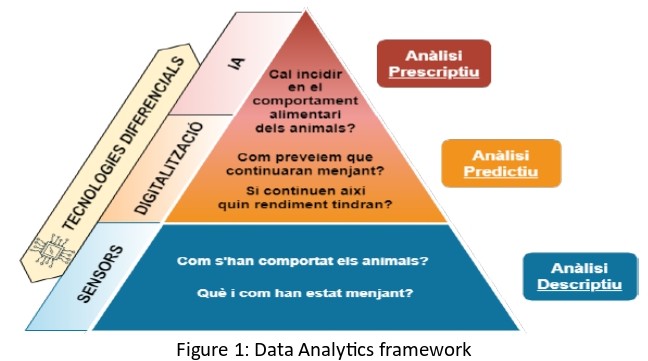
Digitalization reaches fattening farms Process automation and the growing use of automatic feeders increasingly facilitate the application of predictive technologies and data analysis. Despite this, the way decisions are made on farms has changed little. With this new project, we aim to implement intelligent digital systems based on practical knowledge of precision feeding to promote system sustainability and minimize its environmental impact.
What is our objective?
The purpose of this demonstration activity is the application of differential artificial intelligence (AI) predictive technologies to the data collected by automatic feeding machines. By analyzing specific variables such as the number and time of meals, visits to the feeder, amount consumed per meal, and time between meals, we will be able to:
- Study the feeding behavior of fattening pigs and characterize them.
- Identify the most efficient animals to better predict batch growth and maximize their value at the slaughterhouse.
- Have smart digital solutions in the swine sector with reliable predictors regarding the growth, health, and welfare of animals monitored under real farm conditions.
A real impact on the sector
The core technology of the project is predictive analytics based on AI models, leveraging Big Data to improve control and decision-making. This innovation has direct and clear benefits:
- Economic Impact: Monitoring feeding behavior and individual consumption is a good indicator of the animals' growth rate. For example, in a farm of 1,000 animals, being able to close the batch 1 week earlier or later can mean savings of 3,000 euros. Furthermore, detecting changes in feeding behavior can help identify disease outbreaks early, mitigating effects that can have an economic impact of more than one euro per pig.
- Animal Health and Welfare: Individualized consumption data can generate alerts about changes in the animal's health status or the presence of fever. Early detection can lead to a reduction in the administration of medications.
Activity Collaborators
This project was born as a collaborative modality led by the Fundació Centre de Recerca en Agrotecnologia (AGROTECNIO), together with the Centre d'estudis porcins (CEP). The joint work plan ranges from computer data integration and intelligent analysis to experimental field tests, aiming to create descriptive and predictive analysis tools accessible to the sector.